Picture the firm that buys the spy software convinced it will squeeze more out of everyone. Screenshots every few minutes, keystrokes tallied, a little productivity score that turns each person into a traffic light: green if they type fast, red if they dare to think. The boss signs the invoice imagining a workforce that suddenly hums along, output climbing. What he gets is the reverse. The quick ones, the people you actually want to keep, start watching the software watching them. They learn to jiggle the mouse. They stop asking the awkward question that would have saved a client, because asking looks like idling. And within a few weeks the best of them have quietly updated a CV that the productivity dashboard will never flag.
There is a comfortable old line that monitoring motivates, that people work harder when they know someone is looking. It sounds like common sense, which is usually the first clue that it is wrong. Being watched does not make you diligent, it makes you defensive. You stop taking initiative and start performing busyness, because busyness is the only thing the camera can measure. A stopwatch pointed at a craftsman does not produce better carpentry, it produces a nervous man who keeps glancing at the door. And the whole time the owner thinks he has bought control, when what he has really bought is the slow, expensive departure of everyone with somewhere better to go.
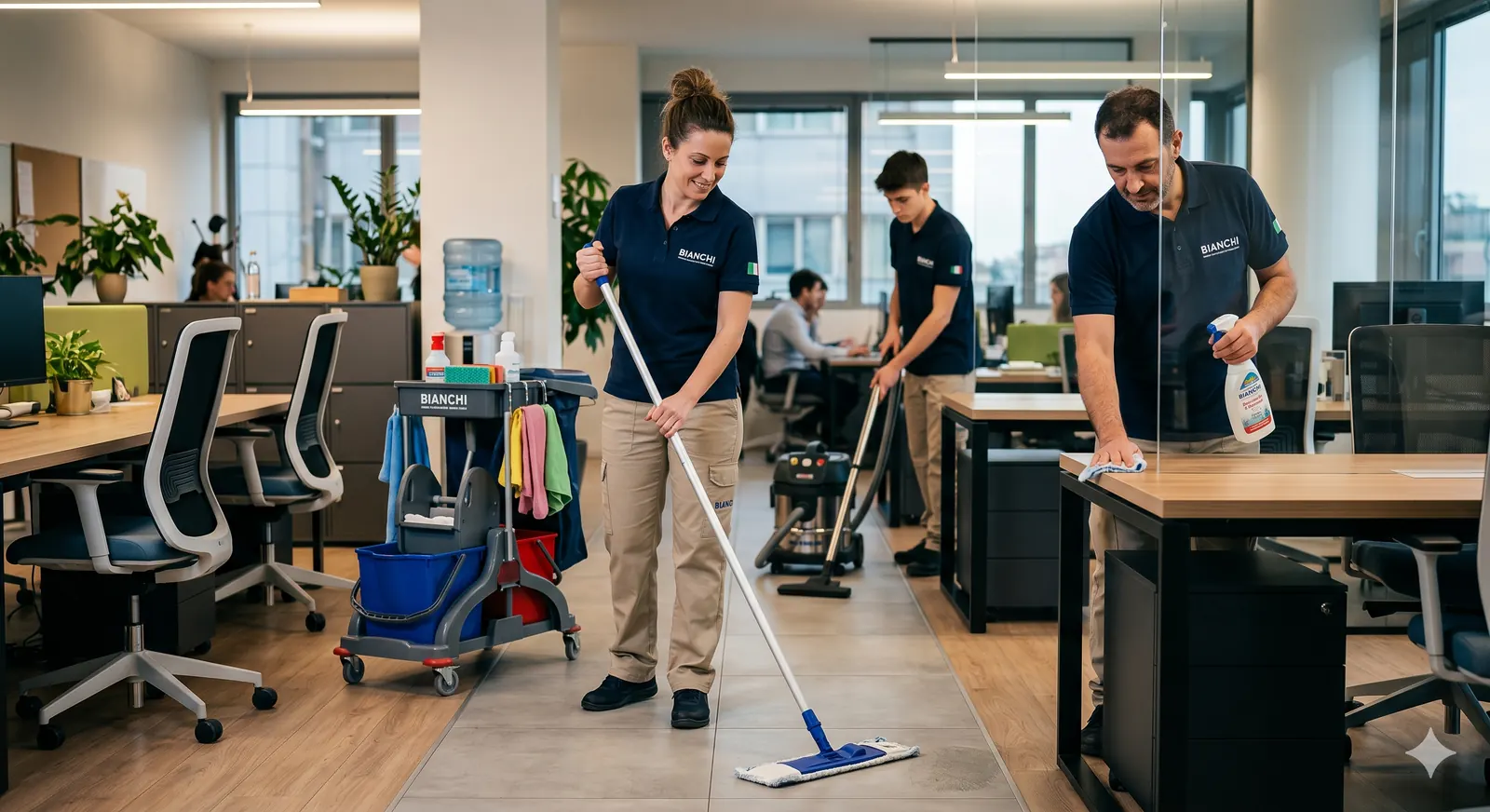
The strange part is that a business with people out in the field, cleaners, security staff, installers, maintenance crews, does not need any of this in the first place. It does not need to know how long someone stared out of a window or how many pixels their cursor travelled. It needs one thing, and one thing only: proof of when and where the work actually happened. That is not surveillance, that is a record. Confuse the two and you do a double harm, you pay for spyware you did not need and you poison the trust that made the good people good.
Want proof of the work without spying on the worker?
In May 2026 a team from Northeastern University, the Vanderbilt Policy Accelerator, UC Berkeley Law and Columbia Law School signed up as an employer, installed nine of the best known workplace monitoring apps, then logged back in as an ordinary employee and watched where the data went. The report is bluntly titled Bossware Is Spying on Workers and Sharing Their Data, and the title is not hyperbole. Every one of the nine platforms passed identifying worker information, names, emails, the company they worked for, straight out to third parties. The researchers counted 121 separate instances of worker data being handed to the likes of Facebook, Google, Microsoft and AppLovin.
It gets worse the longer you look. Details of what workers did online were sent to 145 different third party domains, among them Yandex, a Russian tech firm. A third of the apps could track location even when the app was in the background or the worker had clocked off, which is a polite way of saying they followed people home. So the deal on offer is not merely that your staff feel watched. Your staff get watched, the footage gets sold on, and you, the employer who bought the thing to protect your business, become the person who leaked your team’s whereabouts to an ad network. That is not a productivity tool. That is a liability wearing a lanyard.
Try GeoTapp free for 14 days
No credit card required. Get started in 2 minutes.
Here is the line that matters, and most of the industry works very hard to blur it. There is a world of difference between recording the fact and shadowing the person. Recording the fact is a clock-in: this crew arrived at this address at this time, finished at that one, and here is the stamp to prove it. It is proof, the kind that holds up when a client disputes the hours or an inspector asks who was on site. Shadowing the person is the other thing entirely, the continuous tracking, the screenshots, the movement scores, the eye on the back of the neck all day long. One answers a legitimate question any business has a right to ask. The other answers a question nobody sane wanted asked.
And notice which one actually survives contact with reality. When a customer swears the team only turned up for an hour, a productivity score means nothing, it is just a number your software invented. A timed, located clock-in of when the work started and stopped settles the argument on the spot. The paradox the bossware salesmen never mention is that the proportionate, respectful record is also the only one that stands up in a dispute. Spying gives you a mountain of data and no answer. Proof gives you one clean fact and closes the case.
What the ICO actually asks for
None of this is a hunch. Back in October 2023 the Information Commissioner’s Office published its guidance on monitoring workers, and it is refreshingly clear for a regulator. The law does not ban you from monitoring, but any monitoring has to be necessary, proportionate, and respectful of the rights of the people you monitor. Those three words do a lot of quiet work. Continuous surveillance of everything a person does, all day, on and off the clock, is almost impossible to argue as proportionate, because you cannot show that watching someone leave for home is necessary to run a cleaning round. That is the sort of monitoring that draws a complaint and, eventually, a fine.
Recording the plain fact of the shift is a different animal. A clock-in that captures the time and the place at the moment of the tap, told to the worker up front, with nothing running in between, is proportionate almost by definition. You collect the one thing you genuinely need and not a scrap more. Under UK GDPR that is the whole game: minimise, be transparent, have a reason. Get it right and monitoring stops being a legal risk and becomes a fair record that protects the honest worker as much as the honest boss.
Proof, not an eye on the neck
So the answer for a firm with people in the field is not a better spy. It is to stop spying and start proving. You do not need to know where someone scrolled or how long they sat still. You need the fact that they were on that job, at that time, at that place, in a form that holds. That is the whole design brief, and it is far smaller and calmer than the surveillance market wants you to believe.
GeoTapp was built for exactly that line and no further. One tap to start, one tap to finish, and the location is read only at the moment of the tap, never in between, never in the background, never after the shift. No screenshots, no keystroke counts, no productivity scores, no data quietly sold to an ad network in another time zone. It certifies the work that was done, which is the thing the field actually needs, and it happens to be the thing the ICO actually asks for. It is, if you like, the opposite of bossware: the tool built by someone who looked at that whole surveillance line and refused to cross it.
So the question worth sitting with is not how closely you can watch your people. It is whether you are buying proof or buying paranoia, because they cost about the same and only one of them keeps your best staff from walking out the door. If you would rather have the fact than the footage, you can start a free GeoTapp trial and see how little watching it actually takes to know the work got done.
Get articles like this in your inbox
Practical insights on GPS tracking, field operations and GDPR. No spam, just useful content.