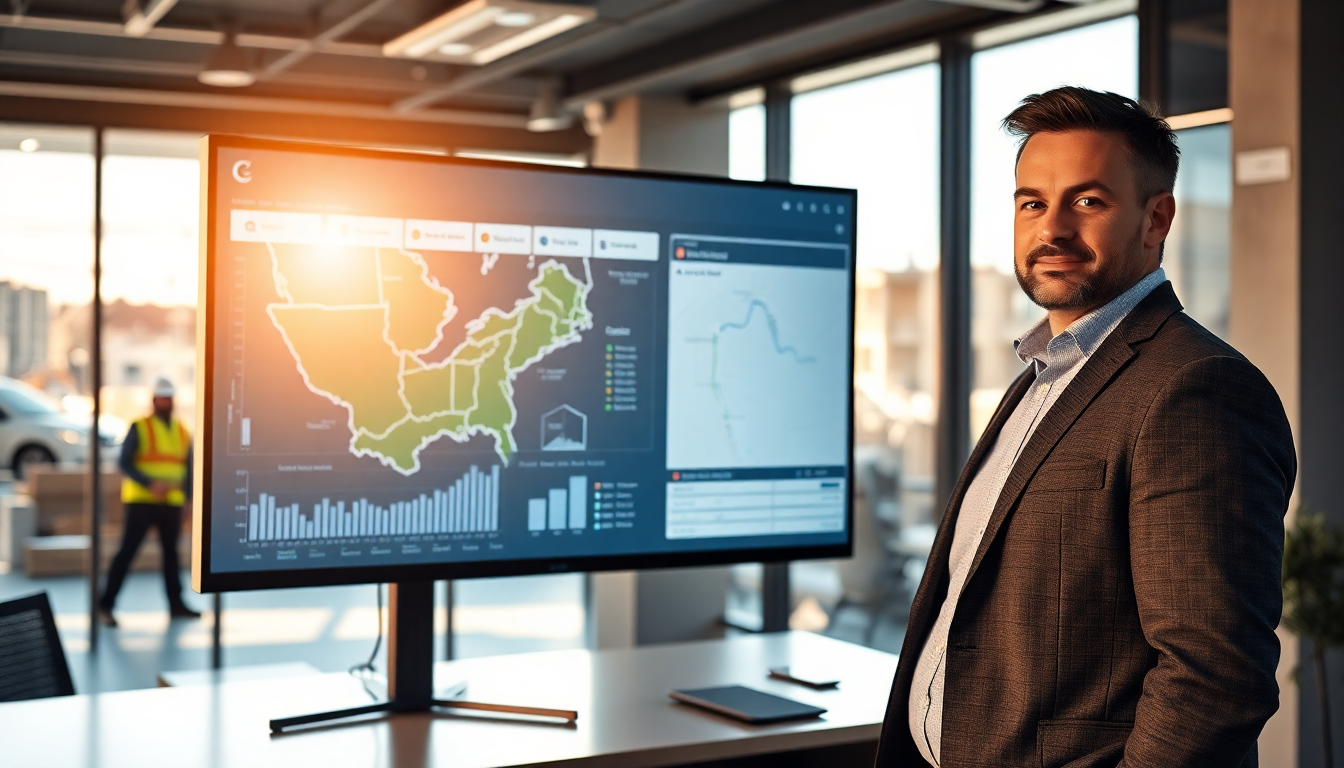

In 2026, the debate about returning to the office dominates the agenda of thousands of companies. Amazon, Goldman Sachs, JPMorgan: the big names require 4 or 5 days in presence. LinkedIn is brimming with outraged posts. The podcasts discuss whether smart working was really productive. But there is one category of workers that looks at this debate from the outside: those who work in the field every day.
For a plant technician, a commercial agent or a maintenance worker, ‘going back to the office’ is a non-issue. They’ve never been to the office. Yet their companies are faced with the same unsolved problem: how do they really know what the team is doing, where it is and if it is working in the right way?
The return to the office does not apply to everyone
The dominant narrative of 2026 divides the world of work in two: those who physically return to the office and those who resist to maintain the flexibility gained during the pandemic. But this division completely ignores the 50% of the European workforce that has never had a desk assigned
to them.
We are talking about installers, logistics workers, maintenance teams, local agents, construction and service workers. For them, the office is the van, the construction site, the customer’s warehouse. The smart working vs. presence debate is irrelevant. But the underlying problem — how to guarantee accountability and productivity without direct physical control — is the same, indeed it is amplified.
Hybrid creep: the phenomenon that is getting out of hand
There is a phenomenon that HR experts call “hybrid creep”: the progressive erosion of the boundaries between presence and absence, between work and non-work, between declared commitment and real commitment. In companies with distributed teams, this phenomenon has always existed — but now, with the increasing focus on measurable productivity, it has become urgent to address it
.
The issue isn’t trust. It’s the lack of operational visibility. A manager who does not know where his teams are, how much time they have dedicated to each construction site, if the stamps match the hours worked, cannot make correct decisions. It cannot optimize costs. It cannot defend itself in the event of a dispute. And most importantly, it cannot understand where the organization is losing efficiency.
This is not micro-management. It is the minimum operational control necessary for a company that wants to be on the market in 2026.
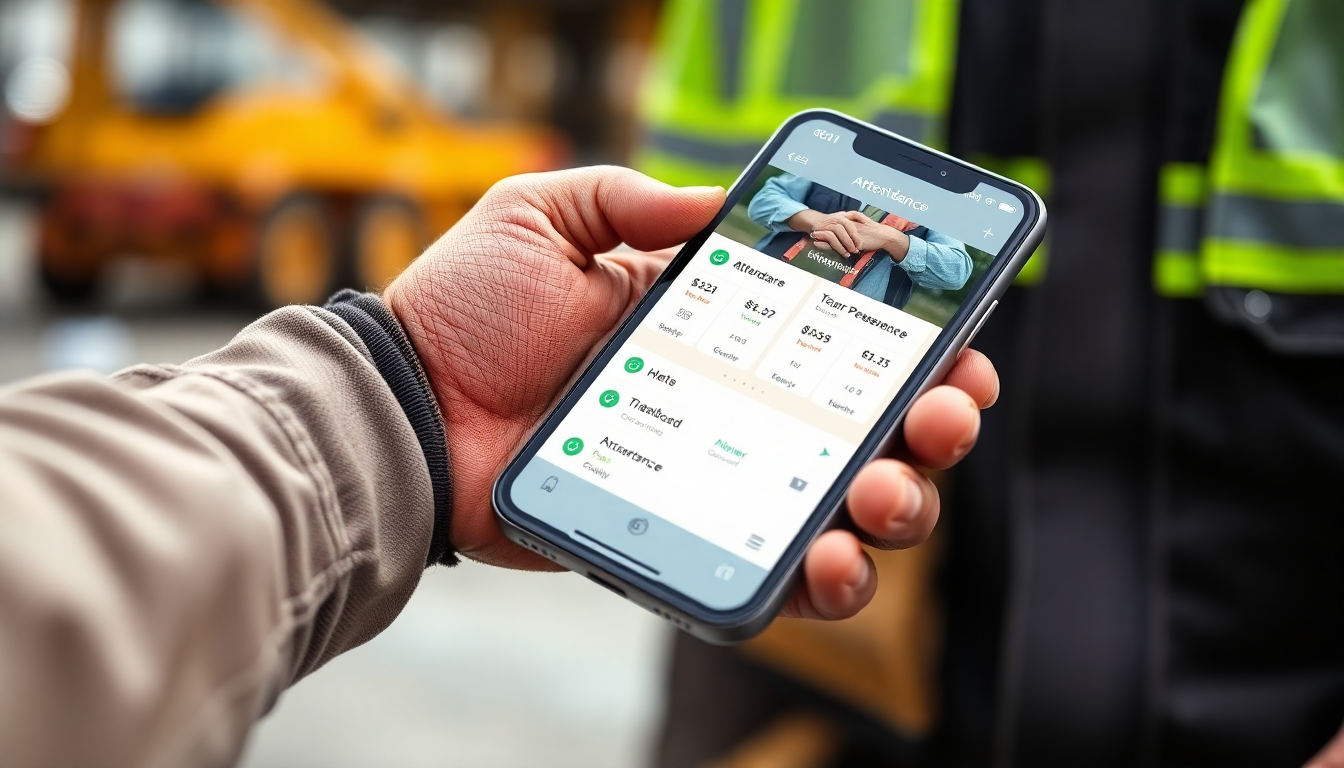
How do you really measure fieldwork?
The most advanced field service companies have already understood that the answer is not to insert stricter rules or ask employees for more manual reporting. The answer is to equip yourself with tools that make visibility automatic and transparent, without burdening those who work in the field
.
This means, in practice:
- Georeferenced stamping: knowing not only what the worker stamped, but from where — automatically verifying that he was on the right job site.
- Real-time planning: assign teams, modify interventions and receive confirmations without continuous phone calls.
- Integrated attendance management: data automatically available for payroll processing, without Excel sheets or manual collection.
- Operational reporting: how many hours per customer, per construction site, per type of intervention — data ready for quick decisions.
It’s not about supervising employees. It’s about having reliable data on which to build an efficient organization
.
GeoTapp: operational control without micro-management
GeotApp was created exactly for this reason. It’s not a surveillance app, and it’s not designed for office workers. It is the concrete answer to the problem of thousands of Italian SMEs that have teams distributed throughout the territory and struggle to maintain operational visibility without placing the burden on area managers
.
With GeotApp you have in a single dashboard the position of your teams, the interventions completed, the hours worked and any anomalies to manage. The stampings take place via the mobile app, are georeferenced and cannot be modified afterwards. The data automatically feeds reports for payroll, billing and reporting to customers — without anyone having to collect sheets or send verification messages
.
Companies that have adopted GeoTapp report a reduction of up to 70% in the hours spent managing administrative attendance and the complete elimination of manual timesheets. Not because the staff has changed — but because the system makes visible what was previously invisible
.
2026 rewards those who have tools, not those who have more rules
While the public debate continues to revolve around “how many days in the office”, companies with field teams have a concrete opportunity: to build a more efficient organization now, while competitors are distracted by discussions that do not concern them.
Those who digitize the management of attendance and distributed work today will have a real competitive advantage within 12 months: lower administrative costs, faster decisions, happier customers because interventions are better planned. Those who wait will continue to waste hours in phone calls, Excel sheets and operational misunderstandings
.
The return to the office is a matter for other sectors. Your problem — and your opportunity — is the operational control of the distributed teams. And that solution already exists.
Do you want to see how GeoTapp works in practice? Find out how it works and request a free demo for your company.
Keep reading
Real-time order control: how to avoid contested reports at the end of the month
2 April 2026
Invisible margin: how much do micro-delays in the field really cost you
31 March 2026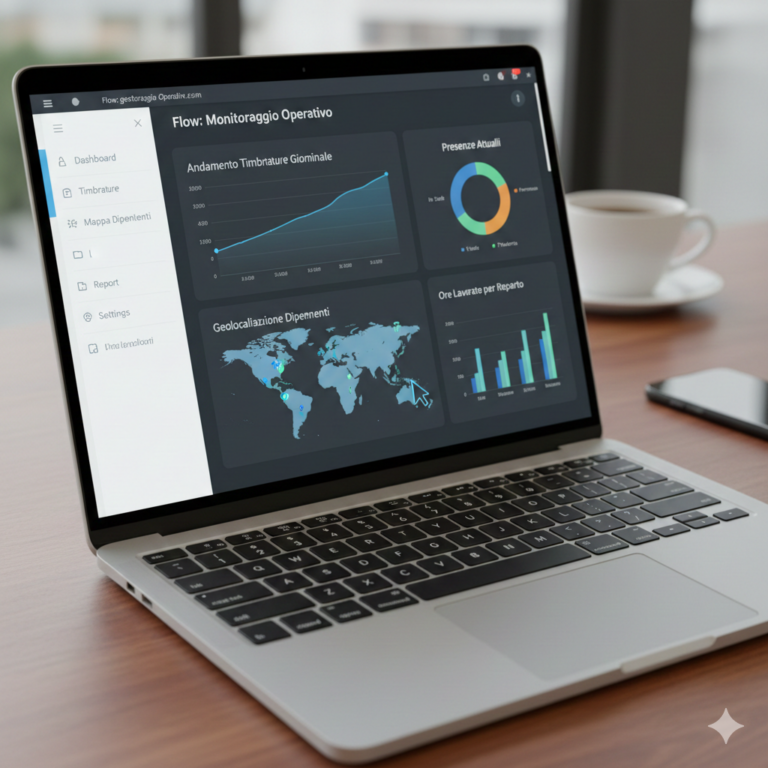
Why do SMEs lose money without knowing it: how Geotapp-Flow puts expenses, employees and inventory in order
18 March 2026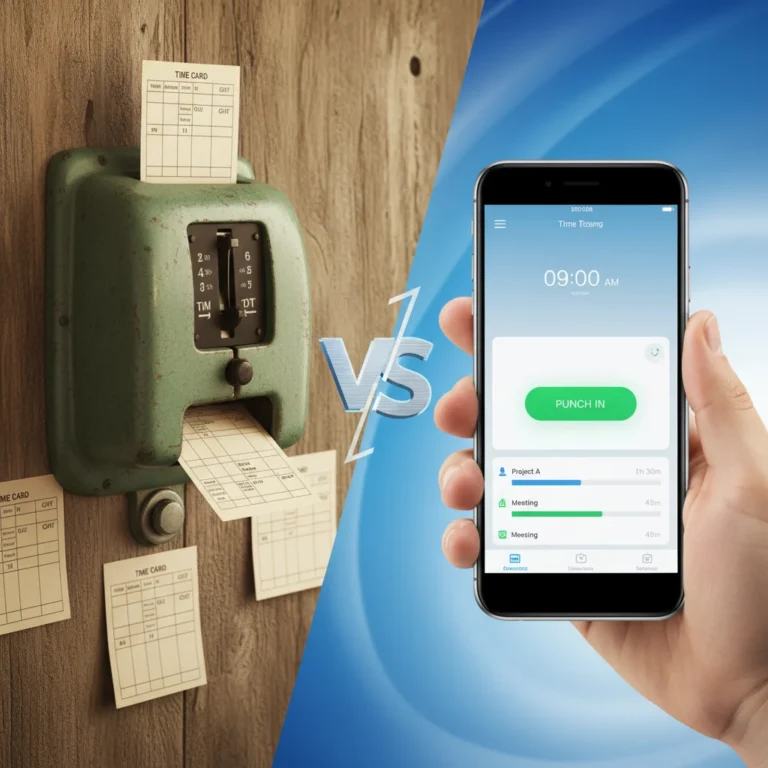
Digital Stamping vs Traditional Tag: SME 2025 Guide
18 March 2026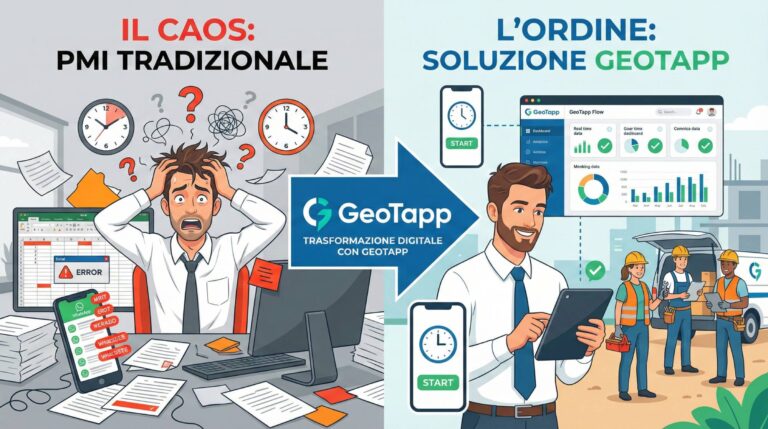
Who is GeoTapp’s ideal customer
18 March 2026
The End of the Analog Era: Why Traditional ERP Is Failing in the Field and How GeoTapp Redefines the Destiny of Dynamic Companies
18 March 2026