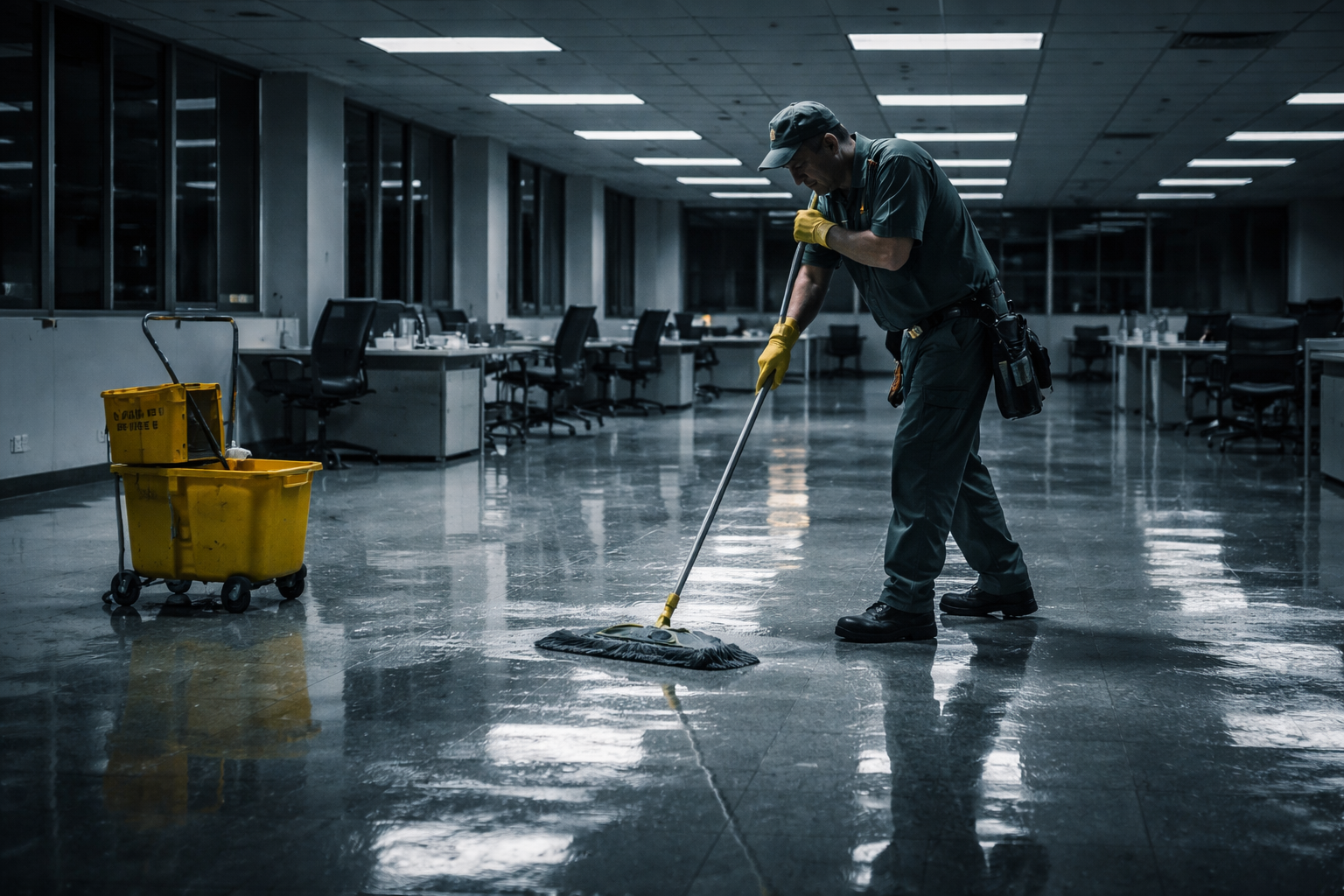

Cleaning companies have a margin problem they don’t see
If you ask a cleaning business owner how much they lose every year to disputes, the most common answer is: “not much, the odd refund here and there”. But if you look at the real numbers — those that emerge from analysing the practices of a sample of companies in the sector — the answer changes radically. The professional cleaning sector has one of the highest margin erosion rates of all B2B services, and avoidable disputes are a significant component.
We are talking about a sector that structurally operates on already compressed margins: contracts are won at cut-throat prices, competition is fierce, and labour costs account for more than 70% of revenue. In this context, every refund granted, every hour of work unpaid because of a dispute, every discount extracted by a dissatisfied client is a direct blow to the survival of the business. Not to its growth — to its survival.
The numbers that hurt
Research conducted on a sample of 80 Italian cleaning companies with annual revenue between €200,000 and €2 million found that on average each company suffers between 8 and 15 formal disputes per year. Of these, approximately 60% are settled with a discount or partial refund, even when the service was actually delivered. The reason? Lack of adequate documentation.
In economic terms, this translates into an average loss ranging from 3% to 7% of annual revenue. For a company with €1 million in revenue, we are talking about €30,000–€70,000 that evaporate every year — not because the work was not done, but because it cannot be proven.
On top of these direct costs come the indirect ones: the time of the owner and administrative staff spent managing disputes, the tension with clients, the risk of losing contracts at renewal because of a relationship degraded by conflict.
Real case: three months of cleaning and no proof
A cleaning company from the Milan area — let us call it Alfa Cleaning for confidentiality — had a three-year contract with a medium-sized commercial property. After eighteen months, the client began systematically disputing Monday morning services, claiming that operators did not always show up. The company had paper signature sheets, but they were incomplete: sometimes operators forgot to get them signed, sometimes the client’s contact was unavailable.
The result was a 15% reduction on the last three invoices, accepted by the company to avoid losing the contract. No lawsuit, no formal dispute: just a silent haemorrhage that no one had calculated in advance. The owner told us: “We had done all the work. The problem was that we could not prove it in an unchallengeable way.”
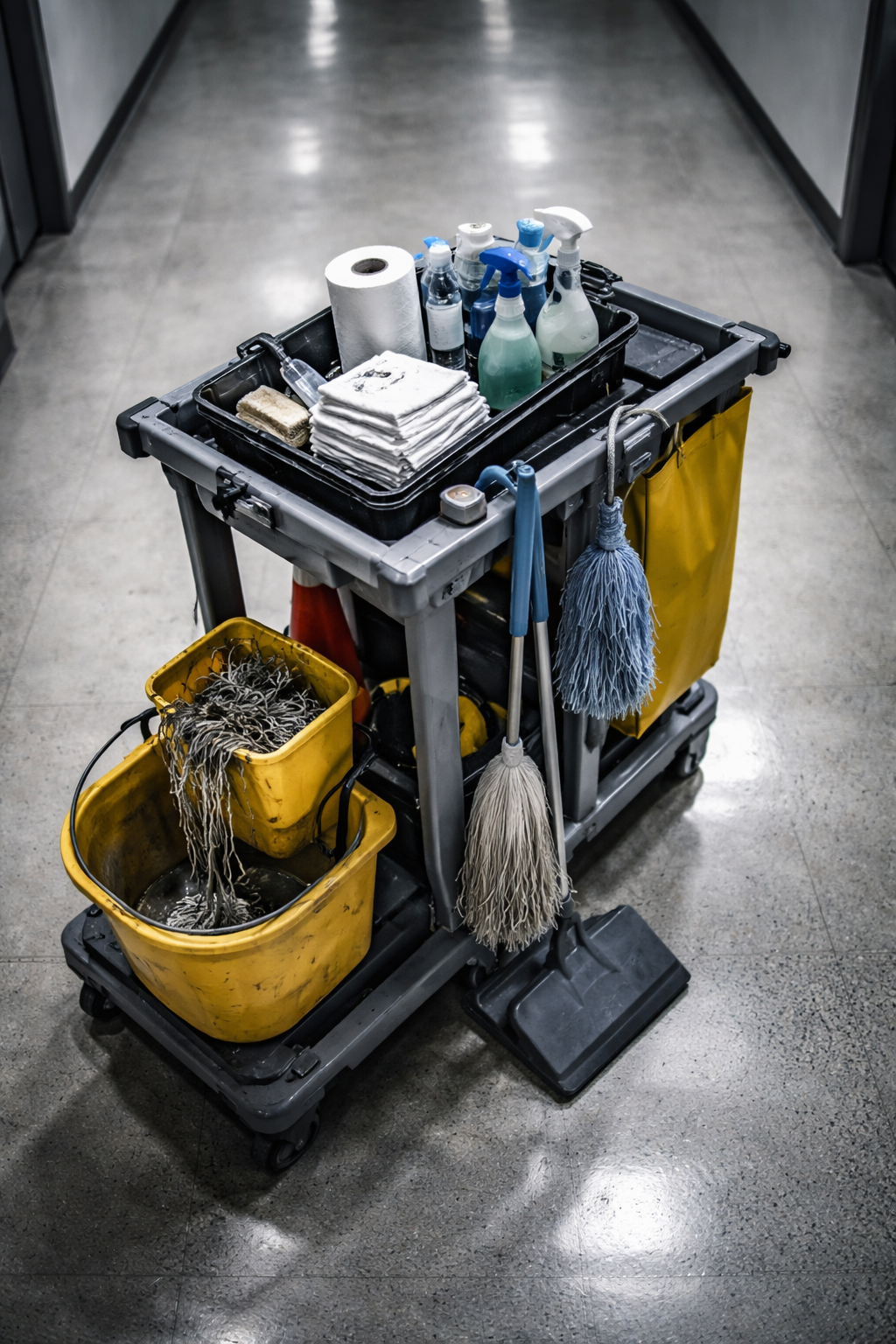
Documentation is not bureaucracy: it is margin protection
The answer to this problem is not to raise prices — in a hyper-competitive market that is almost impossible. Nor is it to reduce service to cut costs. The answer is simple but requires a mindset shift: every service visit must leave a verifiable trace. Not a paper signature sheet that the client can dispute, not an email sent at end of day: an automatic record with GPS, timestamp and the operator’s digital signature that holds up in the event of a dispute.
Cleaning companies that have introduced this system report a double transformation: fewer disputes (because clients know every visit is tracked), and disputes that are faster to close when they do arise (because the evidence is already ready). The time previously lost gathering proof becomes time to grow the business.
If you run a cleaning company and want to stop giving away margins to disputes, discover how GeoTapp makes every service visit automatically documentable. The proof is not collected afterwards — it is generated the moment the operator arrives on site.
Keep reading

How Micro-Delays Quietly Erode Your Field Service Margins
31 March 2026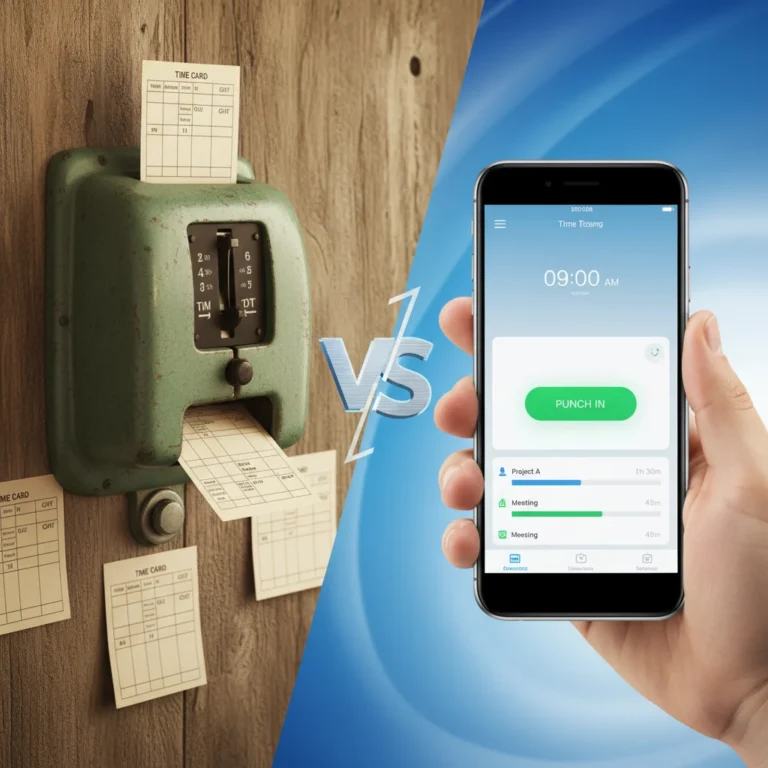
Digital Stamping vs Paper Cards: Real Costs & ROI
18 March 2026
Stop Losing 8% Revenue to Billing Disputes
7 April 2026
Control Every Cleaning Job, Grow Your Business
18 March 2026
5 Field Service Trends 2026 That Protect Your Margins
31 March 2026
Stop disputed reports: real-time order control
2 April 2026