Right to Disconnect Bill C-241 and GPS off-hours tracking in Canada
June 23, 2026 · 5 min
Your dispatch lead has just messaged a federally regulated driver in Sudbury at half past ten in the evening with the next morning’s delivery schedule. The driver declines, on the basis of the company’s right-to-disconnect policy, refers the matter to the union, and within a week the Labour Programme has opened an inquiry. The trade press has already noticed, and the customer’s HR team has noticed the trade press. One late message, and the company’s off-hours practices are now a file with a number on it.
The dispatch lead was not being thoughtless. The schedule genuinely had to go out. But the right to disconnect, in the form it now takes across Canada, is not interested in whether the message felt necessary. It is interested in whether the policy was respected, and a policy is respected in practice or it is not respected at all.
A patchwork that is hardening into a rule
Canada does not yet have one unified right-to-disconnect statute, and an employer who reads that as “no obligation” has misread it badly. The landscape is a patchwork, and the patchwork is hardening. The federal Labour Programme already requires federally regulated employers above a certain size to develop and publish a right-to-disconnect policy. Ontario’s workplace reforms required employers above a threshold to put a written disconnecting-from-work policy in place. Québec’s telework reforms added a right-to-disconnect framework of their own. Other provinces are at the consultation stage, and the direction of travel is not in doubt.
What every one of these frameworks shares is the policy obligation: a written policy, communicated to workers, reviewed periodically, spelling out the periods during which a worker is not expected to respond to contact. The enforcement body differs by jurisdiction, the federal Labour Programme, a provincial ministry, the Québec commission, but the question each of them asks is identical. Did the employer respect, in practice, the policy it wrote on paper?
Try GeoTapp free for 14 days
No credit card required. Get started in 2 minutes.
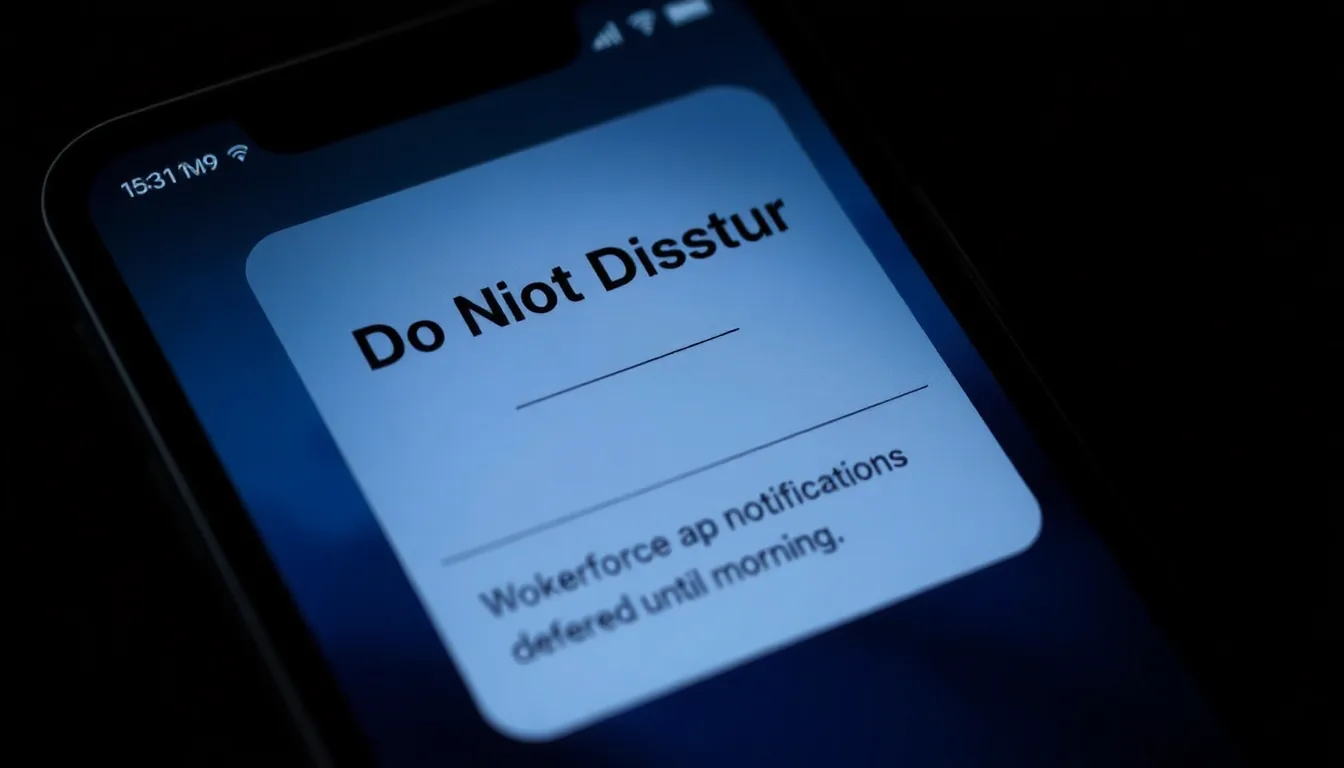
Here is the part employers do not anticipate. A GPS workforce platform that sends notifications outside the policy window, or that asks the worker to do something in the app after the shift has ended, is generating evidence against the policy, automatically, one notification at a time. The tool installed to keep operations tidy becomes the thing the inspector points at.
The fix has two parts. The first is to default notifications and required actions to within rostered hours, with the worker’s policy window acting as the boundary of silence. The second is that where a genuine operational need does require out-of-policy contact, an incident, a safety alert, an urgent change, the platform captures the reason and the worker’s response, building the audit trail the inspector will want to read first. The breaching pattern is always the same handful of habits: the dispatcher messaging at ten, the system pinging a location after clock-off, the export request landing at midnight. Each can be a separate breach, and each is preventable with a little platform discipline rather than a memo asking everyone to be more considerate.
What the federal framework asks for
The federal Labour Programme’s requirements ask the policy to address a defined set of elements: the employer’s expectations during work and non-work hours, the periods of disconnection, how managers are to implement it, the support available to workers, and the periodic review. The policy is to be developed in consultation with the workplace committee, or, where there is none, with the workers themselves. It is a real document with real contents, not a paragraph bolted onto a handbook.
The platform’s job is to enforce that document at the technical level, where enforcement actually holds. Where the policy says workers are not expected to respond to contact through the night, the platform respects that window by default. Where the policy contemplates genuine exceptions, the platform captures each one with its reason and the response to it. The enforcement file is then not something HR has to assemble under pressure. It assembles itself, in the ordinary course of the platform doing its job.
What a complaint actually costs
A right-to-disconnect complaint, whichever jurisdiction it falls in, is rarely about the single late message. It is about the pattern. The investigator looks for repeated breaches, for a culture that treats the policy as decoration, for documents showing the employer routinely disregards a worker’s off-hours. The remedies vary, but they tend to include orders to update the policy, compensation for the workers affected, and a public record of the matter that follows the company afterward.
The Canadian employers who never reach that point share a discipline. The policy is written and real. The platform enforces it rather than leaving it to managers’ judgement at half past ten. Exceptions are logged with their reasons. The workplace committee reviews compliance on a regular cycle. GeoTapp’s notification engine respects the policy window by default and captures the operational reason when out-of-policy contact is genuinely needed, producing the audit log that defends the contact if a worker contests it. Start a free fourteen-day trial, with no card, and let the platform hold the line your policy promises.
Does your workforce app fall silent at the edge of the shift, or does it keep messaging into the evening? Tell us in the comments below. Most operators have never checked, and what you write helps others look before a late message becomes an inquiry.
Get articles like this in your inbox
Practical insights on GPS tracking, field operations and GDPR. No spam, just useful content.