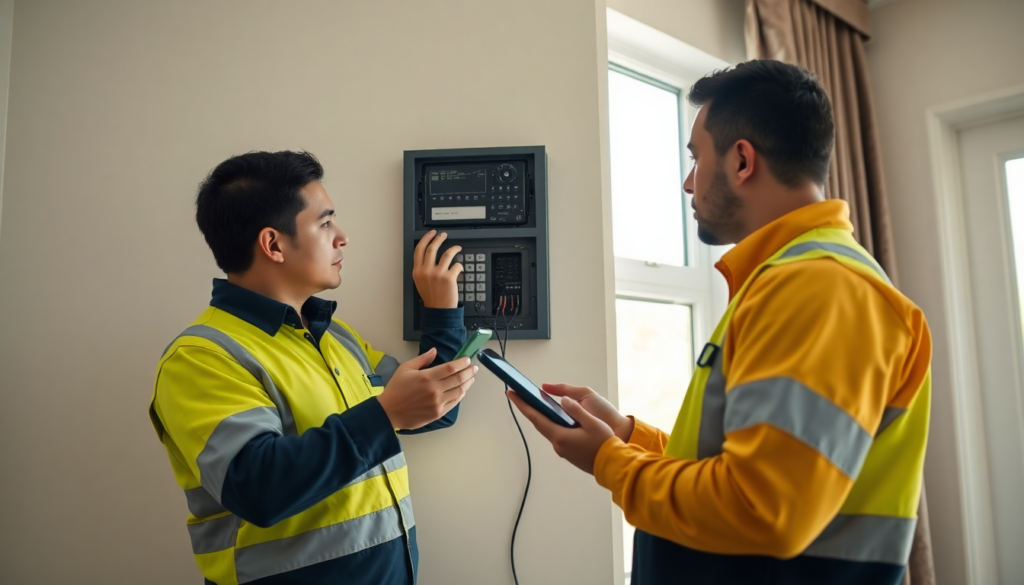
It was 5.40 pm. Your installer had just finished fitting a burglar alarm system in a terraced house. Four hours’ work, two technicians, materials already invoiced. Three days later, the customer calls: “I’ve never seen you; I don’t know what you’re talking about.”
Has this ever happened to you? For those who work with teams in the field, it happens sooner or later. And when it does, without proof you’ve already lost out, not just the payment, but the time spent arguing, the stress, and sometimes even your reputation.
The problem isn’t the customer’s bad faith. The problem is that you’re sending people to other people’s homes without leaving any verifiable record of what they’ve done. A hand-signed sheet, at best. A WhatsApp message, at worst. Nothing, when the technician is in a hurry and the customer isn’t home.
Replace one week of signed sheets and WhatsApp messages with automatic, geolocated, tamper-proof job evidence, and see if the customer arguments survive.
No credit card, up and running in 2 minutes.
Open your trialWhy paper is no longer enough
A handwritten job report has a structural flaw: it can be altered. Anyone can write anything on a piece of paper, put a different date on it, or add a signature that looks like something. In court, an uncertified piece of paper is worth as much as a blank sheet. And your customers, the dishonest ones, know this all too well.
But there is a more subtle problem, which also affects honest customers: memory is fallible. A customer who, three weeks on, cannot remember exactly what you did, when, and who did it, is not necessarily acting in bad faith. They simply do not have a precise reference point. And without a precise reference point, doubt creeps in.
Every dispute you handle costs you, on average, three or four hours in phone calls, emails, site visits and, if necessary, legal fees. Multiply that by the number of jobs per year and you’ll quickly realise how much you’re leaving on the table, not in terms of lost revenue, but in terms of time taken away from your actual work.
What it really means to document a job
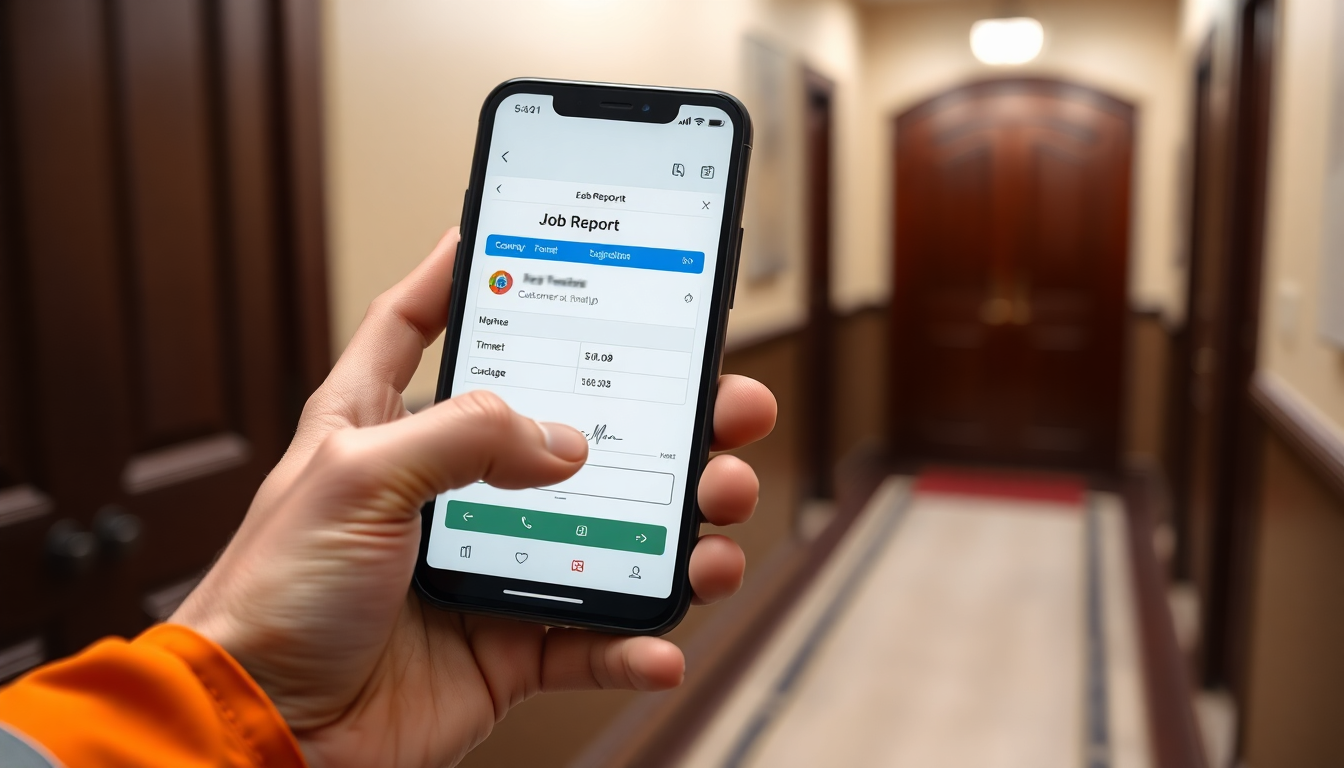
Documenting a job doesn’t mean taking a photo with your phone and sending it via WhatsApp. It means automatically and permanently recording at least four elements: the technician’s GPS location at the time of the job, the exact start and end times, photographs with embedded geolocation, and a digital signature from the customer or a confirmation of receipt.
When these four elements exist and are linked together in a system that does not allow retroactive changes, you have evidence. Not ‘good enough to argue with’, but evidence that stands up even before a magistrate, and which, in most cases, ensures the customer never even reaches that stage.
The point is not to build a case against the client. It is to leave no room for doubt. A client who knows you are automatically gathering evidence of everything you do tends to remember things much better.
The real cost of not doing this
Let’s do a quick calculation. If you manage 10 installers and each carries out an average of 3 jobs a day, in a month you have around 600 jobs documented only on paper or via WhatsApp. If even just 2% of these lead to a serious dispute, that’s 12 situations a year requiring your direct time. At 3 hours each, that’s 36 hours. Almost a working week a year spent arguing instead of growing your business.