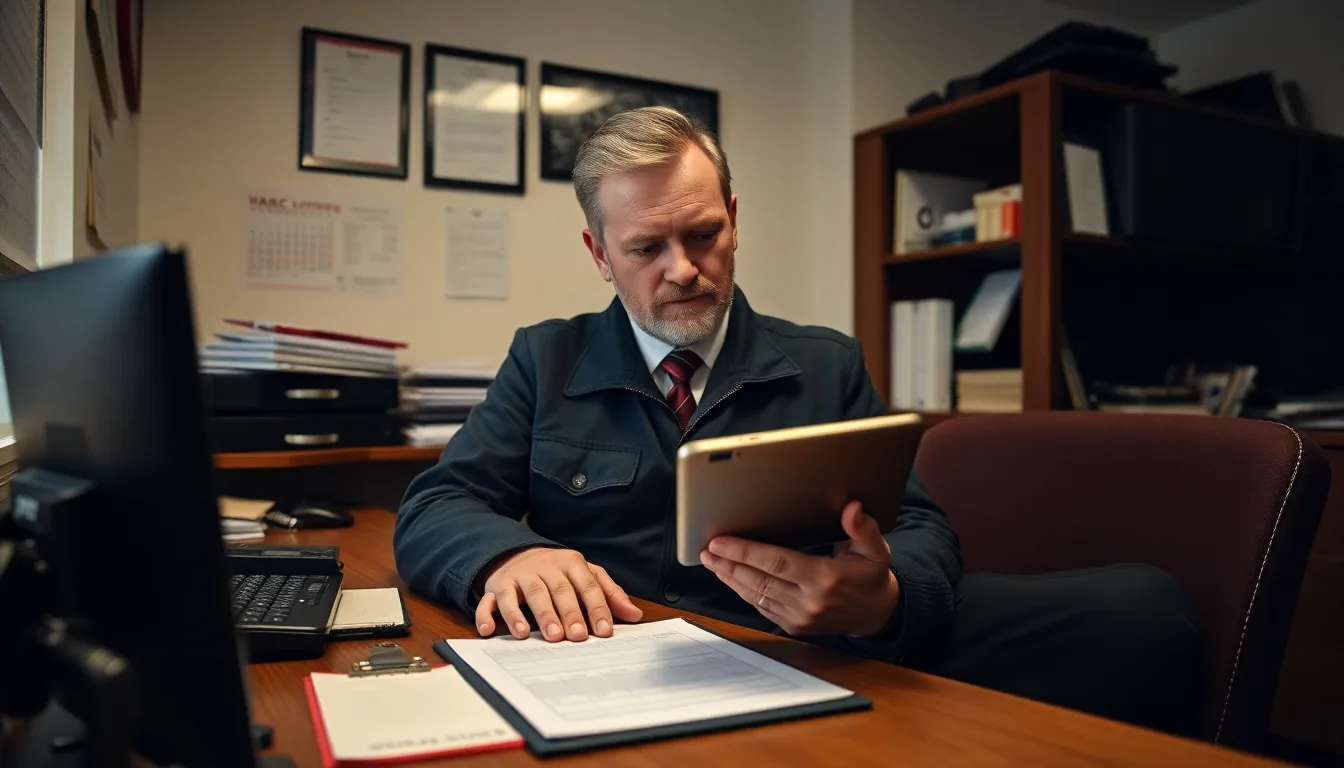
It was a major site – a bank branch with specific standards and a site manager who paid close attention to detail. On Tuesday morning, your supervisor was due to carry out an inspection round before eight o’clock, as agreed. Then there was a problem at another site – an urgent matter – and the round didn’t take place.
The bank’s contact person rang at half past nine. The windows on the second floor hadn’t been cleaned, there were still marks in the guest loo, and a bin had been left full. It’s not all bad – the bulk of the work was done well – but the details are missing, and the client spotted them before you did.
This phone call shouldn’t have come to you. It should have stopped at the supervisor, who should have spotted it that morning and sorted it out before the client noticed. But the supervisor was elsewhere, and you’re dealing with an emergency that you could have avoided.

The supervisor can’t be everywhere, and that’s the problem
Quality control in cleaning companies relies too heavily on the physical presence of a person in a specific place at a specific time. When that person isn’t there, the system breaks down – not because the team is doing a poor job, but because the final check that brings everything full circle is missing.
Major construction sites, banks, professional practices, healthcare facilities and retail chains all have standards that require monitoring. You cannot afford to discover a shortcoming only when the client points it out: by then, the damage has already been done, and the impression they’ve formed of you is that of a supplier who doesn’t check their own work.
How the oversight gap arises
In rapidly growing cleaning companies, a control gap arises almost inevitably. The team grows, the number of sites increases, and supervisors find themselves managing multiple sites simultaneously. On mornings when everything runs smoothly, this isn’t noticeable. On mornings when there’s a problem elsewhere – an absent employee, a broken machine, a client calling with an emergency – low-priority sites are left unsupervised.
An unsupervised site isn’t necessarily a poorly run site. But it is a site where you cannot guarantee quality because nobody has checked it. And that guarantee is what the client pays you for.