Ontario Employment Standards Act and GPS clock-ins: ESA record-keeping
June 16, 2026 · 5 min
An Employment Standards Officer from the Ontario Ministry of Labour is on the phone. Three former employees of your Hamilton cleaning business have filed claims for unpaid overtime, missed public-holiday pay and uncompensated meal breaks, and the officer would like three years of payroll records, time sheets, schedules and break logs by next Wednesday. Your records live in a Dropbox folder that nobody has opened since the bookkeeper left. The Employment Standards Act clock has just started, and Wednesday is closer than the folder is organised.
This is the recurring shape of an ESA claim. The work was almost certainly done, the people were almost certainly decent at their jobs. What is missing is not the work, it is the proof of it, three years deep, in a form an officer can read.
What every Ontario employer has to keep
The Ontario Employment Standards Act sets the floor for most non-federal employers in the province. Section 15 requires every employer to record, for each employee, the wage rate, the hours worked in each day and each week, the amounts paid, the deductions and certain other particulars, and to keep those records for at least three years from when they were made. Around it, section 17 caps daily and weekly hours absent a written agreement, overtime is owed at time-and-a-half after forty-four hours in a week, a thirty-minute eating period is required after no more than five consecutive hours of work, and rest periods between shifts are governed too. Every one of those rules needs a record that can be produced on inspection.
The consequences of falling short are layered. Orders for payment of what is owing. Administrative monetary penalties per breach. Prosecution for serious or repeated breaches, with fines that climb steeply for corporations on later offences. Personal liability for directors for wages and benefits owing. And the Ministry publishes the names of repeat offenders, which carries a cost no payment order ever shows. None of this is theoretical for a cleaning business with a deskless workforce and a high turnover, because that is exactly the profile the Ministry’s officers see most.
Try GeoTapp free for 14 days
No credit card required. Get started in 2 minutes.
Three failure patterns produce most ESA enforcement outcomes. The first is missing break records: the meal break is mandatory after five hours, and a system that never logs breaks cannot prove the break was taken, or that it was properly compensated when it was worked through. The second is overtime miscalculation: the forty-four-hour threshold is weekly, averaging is only allowed under a specific written agreement, and most disputes turn on the simple absence of a contemporaneous record of actual hours per week. The third is public-holiday pay, a calculation that rests on the regular wages in the four weeks before the holiday, and that reforms have simplified and re-complicated more than once.
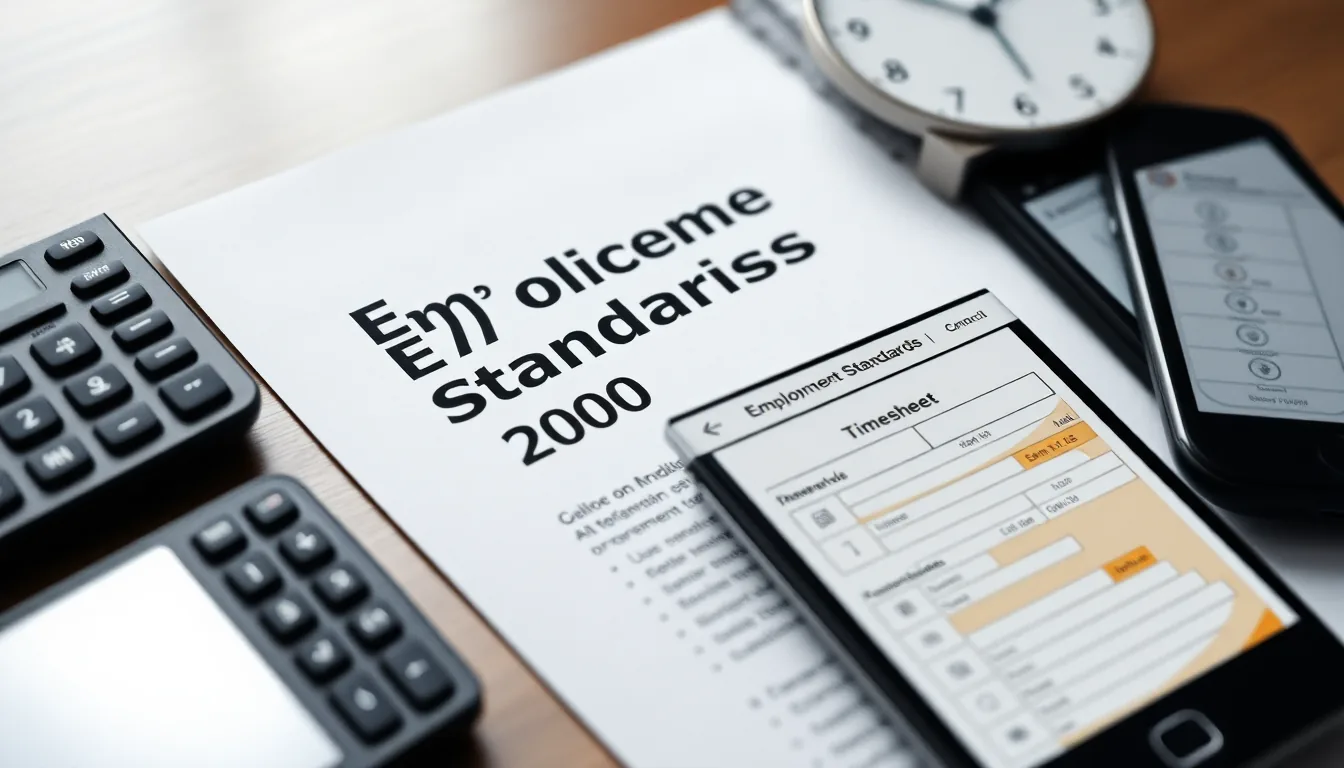
GPS time-tracking closes all three. The mandatory break is logged with a start and an end. The actual hours per week are computed from the clock-in data instead of estimated from memory. And the four-week wage history needed for the public-holiday calculation is exported in seconds rather than reconstructed from sticky notes and goodwill.
The breaks and rest gaps that become silent claims
A worker who skips the meal break to finish a shift and is not paid for it has a claim. A worker whose shift starts in the early morning after finishing late the night before, with too little rest in between, has a claim. A worker whose schedule was changed at the last minute without the minimum-pay protection has a claim. Every one of these is invisible to a payroll system, which only sees totals. Every one of them is visible to a GPS workforce platform, which sees the shape of the day.
The Ontario business that prevents these claims shares a platform-level discipline. The break window is enforced at the schedule level, not hoped for. The rest gap between shifts is checked when the next shift is scheduled, not discovered afterward. The minimum-pay rule fires automatically when a shift is cancelled with too little notice. The platform, in other words, declines to let the supervisor schedule the breach in the first place, which is the only place a breach is cheap to stop.
The Ministry audit, in an afternoon
When the officer arrives, the request is usually formulaic: three years of time records, three years of payslips, three years of break and rest logs, three years of vacation and public-holiday calculations. The employer with platform-based records produces the export in about an hour. The employer with paper or a stale Dropbox folder produces gaps, and the gaps become the determination.
The Ontario employer who comes through clean shares a routine: a quarterly reconciliation between platform records and payroll, a written break-and-rest policy that is actually enforced at the platform level, an awareness of director liability across the senior team, and, above all, a system that prevents the breach rather than merely recording it after the fact. GeoTapp’s ESA module ships with section 15-compliant retention, automated break enforcement and the public-holiday wage calculator already built in. Start a free fourteen-day trial, with no card, and turn the next Wednesday deadline into an afternoon’s export.
Have you had an ESA claim, or that worry about whether your meal-break records would hold up to an officer’s eye? Tell us in the comments below. It is a subject most Ontario employers only examine once a claim has already landed, and what you write helps others examine it a step earlier.
Get articles like this in your inbox
Practical insights on GPS tracking, field operations and GDPR. No spam, just useful content.