Dave had just rolled out the software that counts everything. How often the mouse moves, how many minutes the screen sits still, what time the first click lands in the morning. It had been sold to him as the end of all doubt: at last he would know who was really working and who was coasting. Three weeks later the best person on his team, the one he had never once had to check on, left her notice on his desk. And it had nothing to do with money.
There is a paradox doing the rounds among the people who manage other people, and it makes more noise than you would expect. The tighter you squeeze the surveillance to get more, the less you get. It is not a hunch any more, it has become a whole strand of research. Firms that monitor have hit enormous numbers, something like eight in ten now run some form of digital tracking and six in ten lean on artificial intelligence to measure productivity. And yet, when you go and read what it actually does to the workforce, the picture flips right back in the face of whoever paid for it.
The data gathered through 2026 tells a sharp story. Almost six employees in ten say digital tracking wrecks the trust inside a company. Seven in ten say it does not make them one bit more productive. And the figure that ought to keep whoever signs these contracts awake at night: among the people being watched, more than four in ten are thinking of leaving within the year, against barely two in ten among those who are left alone. Research out of Cornell University goes further and says something even more awkward, that heavy monitoring can actually drag output down and push the exits up. You spent money to keep a closer eye on them, and the upshot is they work worse and wave goodbye sooner.
Want to know where your crew has worked, without leaning over their shoulder at the screen?
Watching people and holding proof are two different things
Here sits the point almost nobody stops to separate, and it changes everything. One thing is to watch people as they work, count the keystrokes, snap the screen every ten minutes, clock how long they sit idle. Another thing entirely is to hold the proof that a job was done, where and when. The first is mistrust poured into software: it starts from the assumption that your team is having you on, and it makes them feel it every single minute. The second watches nobody, it records a fact and stops there. Under UK GDPR the line is not just good manners either. The ICO has been blunt that monitoring has to be necessary and proportionate, workers have to be told, and a covert keystroke logger draped over the whole day is the kind of thing that gets a company in front of a regulator.
Think about how you feel when somebody is breathing down your neck. The supervisor who rings you three times before lunch to ask where you are up to, the client who swings by on purpose to check you really turned up. You do not work better, you work worse and with a knot in your stomach. Your cleaner, your guard, your fitter is no different. Put them under a digital camera and you are telling them, without saying it, that they are worth nothing until they prove otherwise. Good people hear that sentence loud and clear even when no one says it out loud, and it is the first reason they walk.
Try GeoTapp free for 14 days
No credit card required. Get started in 2 minutes.
There is a name for this stuff now, people call it bossware, and the marketing behind it is a well oiled machine. They sell you dashboards crammed with charts, productivity scores, alerts when somebody sits idle too long. It looks like science. In practice it is a stopwatch aimed at people’s backs, with the added risk that the score is plain wrong: the algorithm flags the person who is thinking, the one on the phone to a supplier, the one who simply does a job you cannot measure in mouse clicks. And once a company starts making decisions off those numbers, the one who pays is usually the steady worker the software never understood. The Employment Rights Act and the ACAS guidance both point the same way: discipline somebody on a dodgy metric and you are not just being unfair, you are building yourself a tribunal claim.
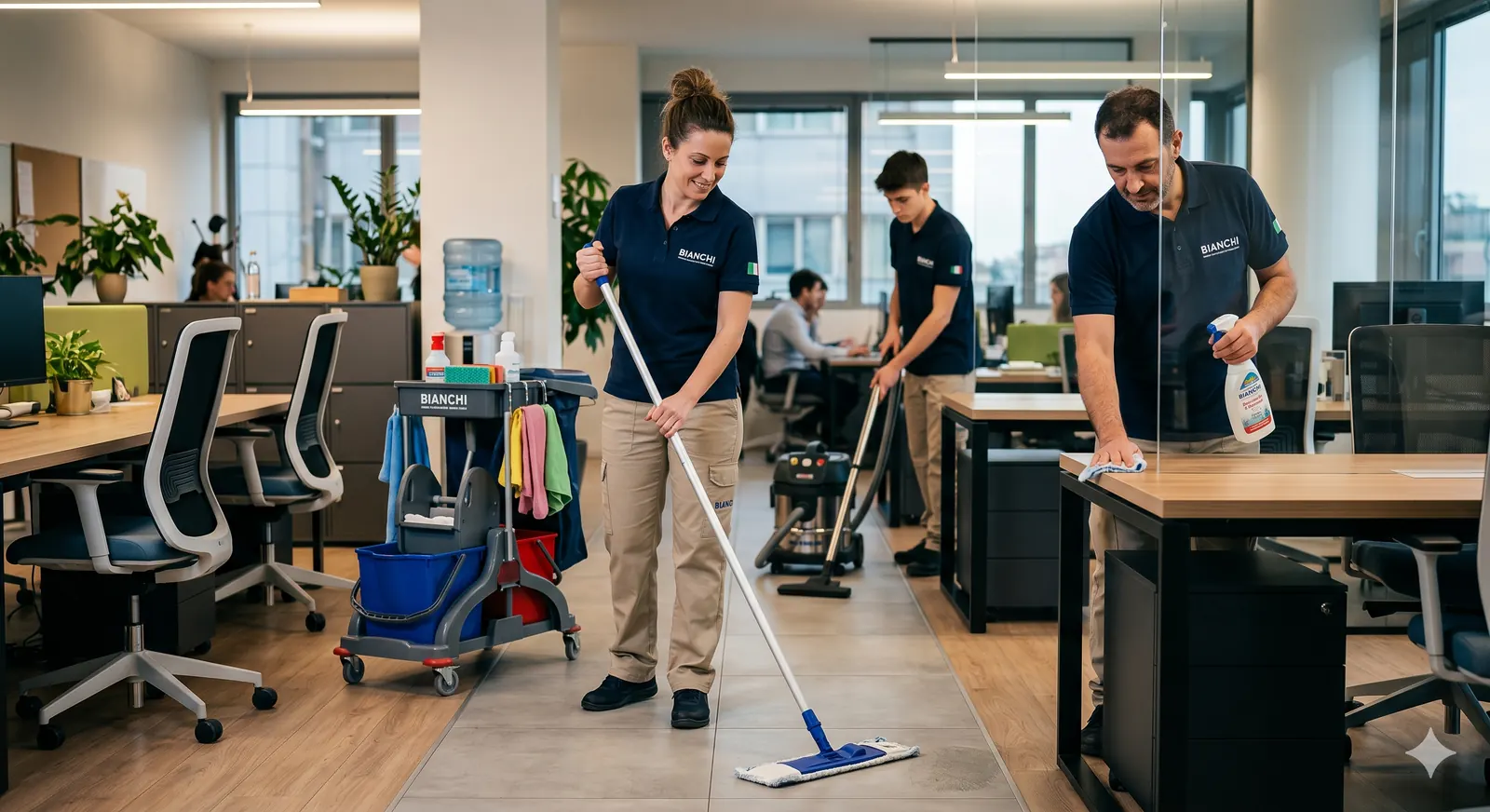
For anyone running crews out in the field, none of this has the faintest thing to do with the real work. A cleaner, a fitter, a security guard is not sitting at a screen to be counted. They are on a site, in a warehouse, in a customer’s house. What you need to know is not how many keys they tapped, it is something far simpler: did they get to where they were meant to be, what time did they start, what time did they finish, and is there a way to prove it if tomorrow the client claims nobody showed up. Nothing more than that, and above all nothing intrusive.
Proof of work also works for the honest ones
And this is where the whole thing turns the right way round. A record of the visit, a clock-in with the location taken only at the start and the end of the shift, a photo snapped on site there and then, is not a ball and chain on the worker’s ankle. It is their defence. The day a client disputes a job that was never missed, or insists the crew rolled up at ten instead of seven, that proof stands on the side of whoever actually did the work. Obsessive control divides, proof protects. They look like neighbours and they face in opposite directions.
GeoTapp was born on this side of the line. The app takes the location only when you clock the start and the end, it follows nobody through the day, and once a session is closed it can no longer be touched. There is device attestation underneath, Play Integrity and App Attest, and the photos come from the live camera only, not the gallery. It is not an eye trained on people, it is proof that stays. The difference, for the people who use it, is that the crew does not feel hunted and you still hold in your hand what was done, where and when. Without choosing between trusting them and sleeping at night.
So the question to ask yourself, before you sign yet another subscription to software that counts clicks, is a single one: do you want to control your people, or do you want the proof of what they do? Because the first road, the numbers say so, sends them out the door. The second keeps them, and covers your back when it counts.
Proof of work, not surveillance: location only at clock-in and clock-out, sessions that cannot be touched.